Cricket's Decision Review System, explained for new fans
Ball-tracking, edge detection and "umpire's call" decide some of the biggest moments in a match. Here is how a review actually works.
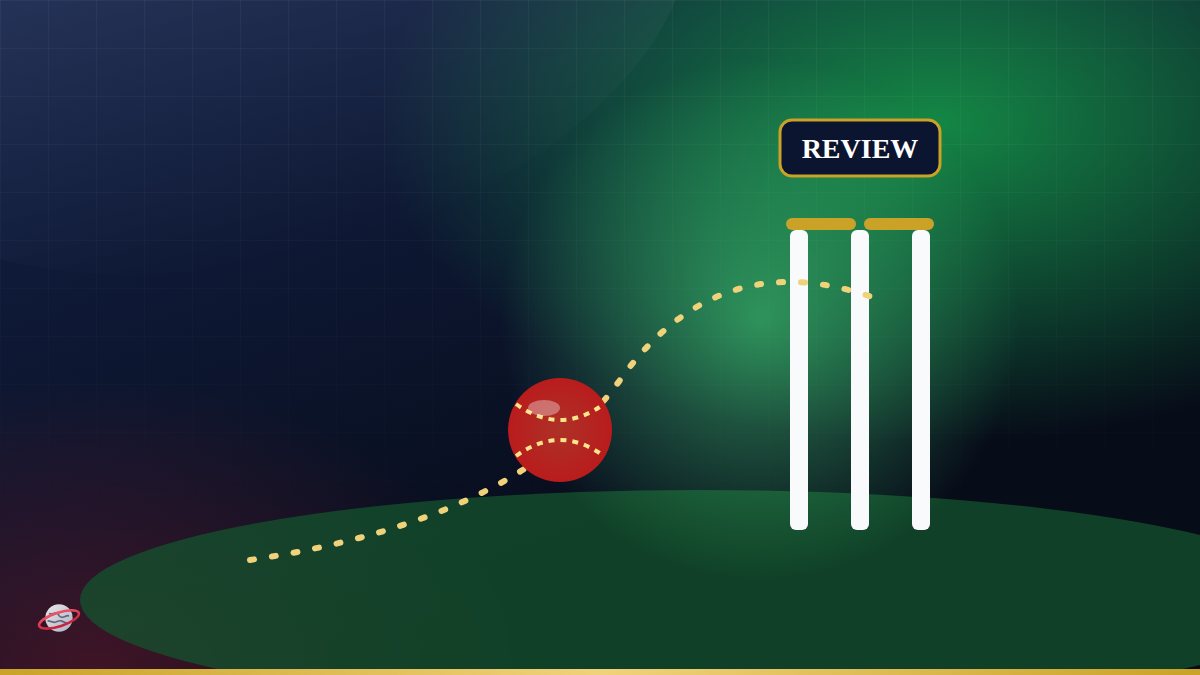
Few moments in cricket are as tense as a captain forming a "T" with their hands. The Decision Review System, or DRS, lets teams ask the third umpire to check an on-field decision using television replays and technology. Here is what happens next.
Who can ask for a review?
A fielding captain can challenge a "not out" decision, and a batter can challenge being given out. They must signal quickly after the decision. Each team has a limited number of unsuccessful reviews per innings — get it right and you keep the review; get it wrong and you lose one.
What the third umpire checks
- Replays from several camera angles, used for catches, run-outs and whether the bowler overstepped.
- Edge detection, using sound and heat-based systems, to see whether the ball touched the bat or glove.
- Ball-tracking, which reconstructs the ball's path to show where it pitched, where it hit the pad and whether it would have gone on to hit the stumps — the key evidence for leg-before-wicket (LBW).
Why "umpire's call" exists
Ball-tracking is a prediction, not a photograph. So when the technology shows the ball only clipping the edge of the stumps, or hitting the batter close to the boundary of the stumps' zone, the original on-field decision stands. That margin is called "umpire's call". A team that reviews and gets umpire's call does not lose its review.
Why it matters
DRS was introduced to remove clear mistakes, not to re-umpire every ball. Used well, it rewards teams that understand the game's details — and it is one more reason to watch the replays closely next time the Tigers take the field.